Overview
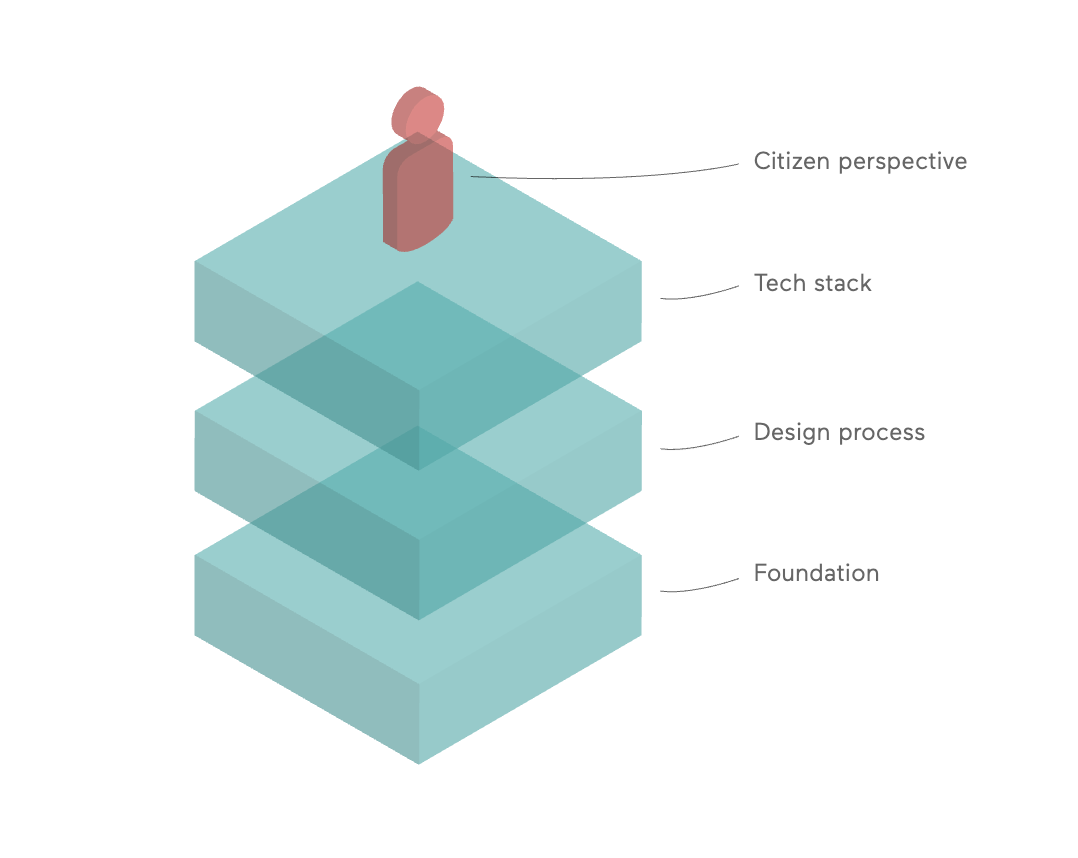
The Public Stack model is organised into four sections:
Citizen Perspective — the starting point. Not what technology is available, but what rights, values, and needs people have, and the larger context that constructs someone as a citizen in the first place. That lens shapes every decision: which software to run, how to govern it, and who is accountable for it. The citizen can have many roles; we describe three: Resident, Maker, and Steward.
Foundation — the organisational prerequisites. Deploying something is only the start; the harder question is whether it gets used and trusted. The citizen describes the Starting Points, merges that with their Rights & Values and the legal constraints those bring, chooses how to live and govern together, and minds the socio-economic conditions that make all of it sustainable.
Processes — the citizen isn't given prior to these processes; they're constituted within them. What a tool affords shapes how people behave, and paying attention to that behaviour shapes the tool in turn — a continuous cycle, not a one-off rollout. Five concrete processes carry it: organising so work stays visible and ownership stays clear, designing a service before it's ever deployed, living with it as the day-to-day resident experience of using it, maintaining it to keep everything running, and archiving what was tried and why.
Tech Stack — the technology itself, divided into two parts:
- Context — the cross-cutting concerns that apply at every layer, not just one. Services is how technology is actually experienced, end to end, across devices and layers. Security makes sure the right people, and only the right people, can access data. Protocols & Standards are the open agreements between layers that prevent vendor lock-in. Data & Algorithms covers what's collected, how it's used, and who decides.
- Layers — the vertical stack, where each layer depends on the one below it. Infrastructure & Equipment is the compute, network, and data centres everything else runs on, and choosing it decides whose jurisdiction and commercial interests you depend on. The System makes that hardware usable by applications, managing the processor, memory, storage, and networking underneath them. Applications are the layer people actually see and use.